




The County Line Matters Less Than You Might Think
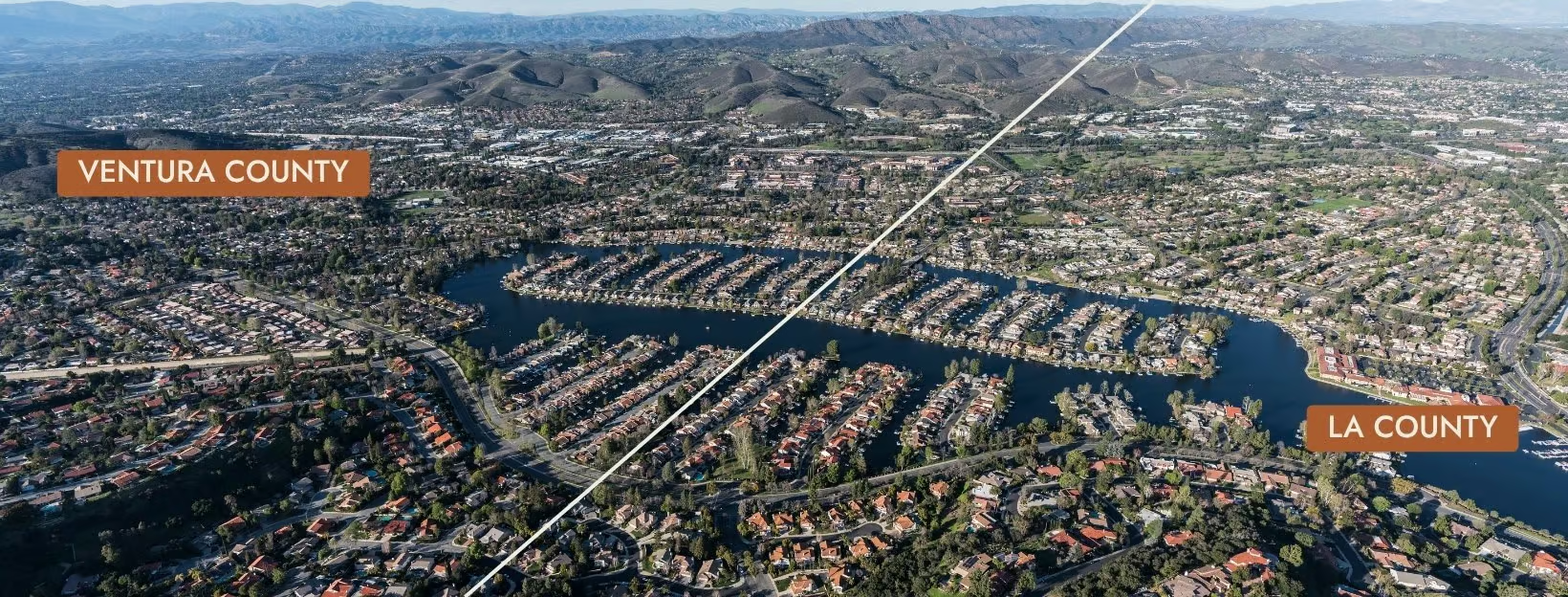
If you’re moving to the Conejo Valley, you’ve probably noticed that some of our towns are in Ventura County while others are in Los Angeles County.
Naturally, that leads to another question: Should I care?
The answer is yes, but probably not as much as you think.
The county line does affect a few things, including…
- School districts
- Property & sales tax
- Commute time
Most buyers fall in love with a neighborhood, a particular home, or a school district. The county simply comes with it.
LA County is not LA City
Before we get into the differences, I think it’s helpful to clear up one misconception that I frequently hear.
When I talk about Los Angeles County, I’m not talking about the City of Los Angeles.
Agoura Hills and Westlake Village are in Los Angeles County, but they don’t feel anything like Hollywood, Downtown LA, or even much of the San Fernando Valley. You’re still very much in the Conejo Valley.
In fact, if I were giving you an area tour, there’s a good chance you wouldn’t even realize we’d crossed the county line.
THE 5 TOWNS THAT MAKE UP THE CONEJO VALLEY
Which Towns Are in Which County?
The Conejo Valley straddles the Ventura and Los Angeles County line. Here’s the simple breakdown:
Ventura County
- Thousand Oaks
- Newbury Park
- Oak Park
- Westlake Village | Ventura County side
LA County
Westlake Village is where things get a little confusing, so it’s worth explaining.
Why Westlake Village Can Be Confusing
The county line cuts right through the middle of Westlake lake splitting Westlake Village into two sections.
→ The incorporated City of Westlake Village is entirely in Los Angeles County
→ The Westlake Village neighborhoods that are technically part of Thousand Oaks
Neighborhoods like Foxmoor and Whitehawk are on the Ventura County side of Westlake Village and therefore technically part of Thousand Oaks. But look up a Foxmoor address on Google Maps and it will show Westlake Village. Ask a Whitehawk resident what town they live in, and 100% of them will tell you Westlake Village.
That’s why two homes that both claim “Westlake Village” in the address can actually be in different cities, counties, and school districts.
So, When Does the County Actually Matter?
School District is the main factor that often drives the decision.
The Conejo Valley is known for its excellent schools. If you’re moving out this way, there’s a good chance the schools played a role on that decision. For many home buyers, the first place the county line becomes relevant is with schools.
The Conejo Valley has 3 school districts:
- Las Virgenes Unified serving Agoura Hills and the City of Westlake Village
- Oak Park Unified is our highest rated school district serving Oak Park
- Conejo Valley Unified is the largest serving the Ventura county side of Westlake Village, Thousand Oaks, and Newbury Park
All three are strong, well-regarded districts. The choice between them usually comes down to specific schools, programs, or what’s most important to your family, not one being clearly better than the others.
That’s why I don’t really think of this as choosing a county. If schools are driving your search, you’re really choosing the school district that’s the best fit for your family, and the county usually takes care of itself.
I put together a detailed guide covering all three districts — how they compare, what the boundaries look like, and what to know before you search.
Conejo Valley School Districts ExplainedCommute is worth considering too, although that’s really more about geography than the county line. If you’re commuting toward Los Angeles, living farther west in Thousand Oaks or Newbury Park could easily add 15 to 20 minutes each way compared with Agoura Hills. That’s enough of a difference that I always want buyers to think about what that drive will actually look like before deciding how far west they want to live.
What About Taxes, Insurance, and Utilities?
People often assume Ventura County automatically means lower property taxes, but it really isn’t that simple.
California’s Proposition 13 sets the basic property tax rate at 1% of a home’s assessed value. Your actual tax bill will usually be higher because voter-approved bonds and other local assessments can be added on top of that. Those can vary by neighborhood, school district, and even individual property, so there isn’t one exact tax rate I can give you for Ventura County or Los Angeles County.
As a general rule of thumb, I tell buyers to budget around 1.25% of the purchase price, give or take, regardless of which side of the county line they’re considering.
Sales tax is significantly different.
- LA County: 9.75%
- Ventura County: 7.25%
Day to day, most don’t really give much thought as to what county we’re in before making a taxable purchase, but it can make a difference for big purchases like furniture and appliances. And when you buy a car, your tax rate is determined by your county of residence, not where you purchased the car.
Insurance & Utilities
If you’re wondering about insurance, the county line generally isn’t the big factor there either. Homeowners insurance is much more dependent on the specific property and its wildfire risk, while auto insurance is based on a variety of factors, including where the car is actually garaged. I wouldn’t consider either one a reason to choose Ventura County over LA County.
The same goes for utilities. They’re pretty much the same on both sides of the county line, so that’s not something I’d factor into the decision either.
I’ve lived in both counties, and if everything else were equal, I’d choose Ventura County.
I’ve found a few things, like the permitting process for home improvements, sales tax and even jury duty, a little easier to deal with. But those are pretty minor differences in the big picture.
I certainly wouldn’t pass on the right house in Agoura Hills or Westlake Village because it’s in Los Angeles County. The house, neighborhood, schools, and location are going to matter much more than the county line.
That’s really the takeaway. There are some differences between Ventura and Los Angeles County, but for most buyers, I don’t think they’re significant enough to drive where you live.
Find the town and neighborhood that fit you best, and let the county come with it.
If you’re relocating and still getting oriented to the area, this guide walks through the towns, neighborhoods, schools, and what it’s like living in the Conejo Valley.
Conejo Valley Relocation Guide
Enjoying this post?
I’m Michael Rice, the Conejo Valley Guy. I share practical insights about buying, selling, and living in the Conejo Valley based on 25+ years helping clients navigate this market.
If you find this kind of local perspective helpful, you can get future posts and my monthly market update by email.