





A Simple Guide to Property and Sales Taxes
When you’re buying a home in the Conejo Valley, property taxes are an important part of figuring out what you can comfortably afford. The good news is they’re fairly easy to budget for.
As a general rule of thumb, I tell buyers to estimate property taxes at around 1.25% of the purchase price per year, give or take. Your actual tax bill will vary depending on the property, but that will usually get you pretty close for planning purposes.
One question I hear quite a bit is whether property taxes are lower on the Ventura County side than the Los Angeles County side. It’s a logical question, especially since the county line runs right through Westlake Village, but the answer isn’t as simple as you might think.
Sales tax is a little different, and that’s where which side of the county line you’re on can make more of a difference.
WHICH TOWNS ARE IN WHICH COUNTY
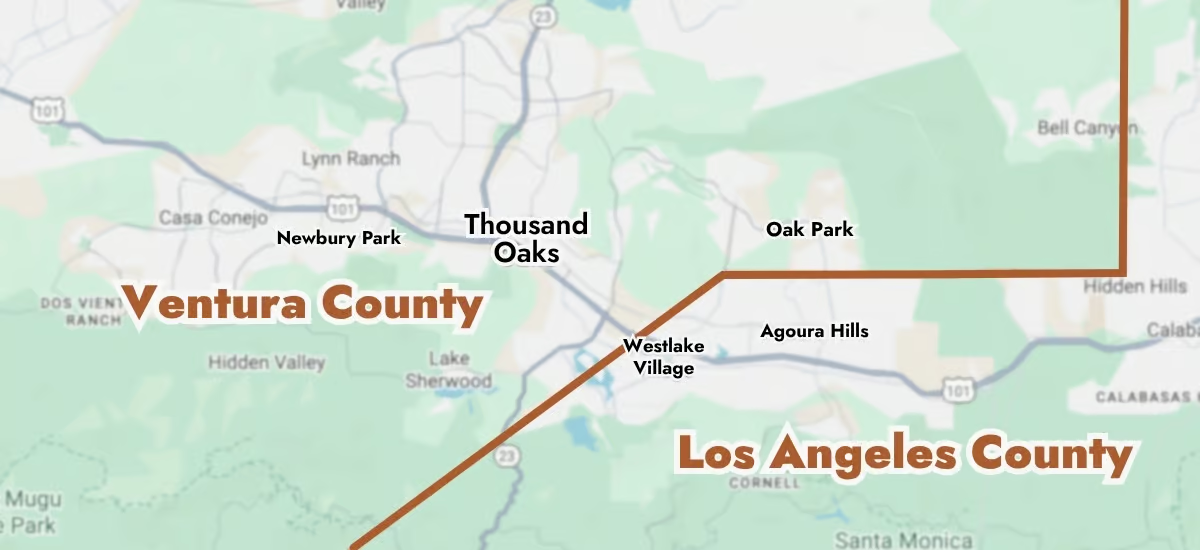
The Conejo Valley straddles the Ventura and Los Angeles County line. Here’s the simple breakdown:
Ventura County
- Thousand Oaks
- Newbury Park
- Oak Park
- Westlake Village | Ventura County side
LA County
How Property Taxes Work in the Conejo Valley
Many people believe that property taxes in Ventura County are lower than LA County. That’s not always the case. In fact, in can sometimes be the exact opposite.
California’s Proposition 13 sets the basic property tax rate at 1% of a home’s assessed value. Your actual tax bill will usually be higher because voter-approved bonds and other local assessments can be added on top of that. Those can vary by neighborhood, school district, and even individual property, so there isn’t one exact property tax rate I can give you for Ventura County or Los Angeles County.
That’s why I generally tell buyers to use 1.25% as a budgeting number rather than getting too caught up in published tax rates.
For example, if you’re buying a $1.5M home, budgeting at 1.25% would put your estimated property taxes at about $18,750 per year, or $1,563 per month.
Your actual number could be a little higher or lower, but that’s a much more useful number when you’re trying to figure out what you can comfortably afford.
Take Oak Park, for example. It’s in Ventura County, but because of additional assessments, including school bonds, the actual property tax rate can be closer to 1.30%. As an Oak Park resident, I don’t mind paying a little extra. Our schools are one of the biggest reasons people want to live here, and in my opinion, that has a direct impact on our home values.
Will My Property Taxes Go Up Every Year?
Usually, but not by much.
Under Proposition 13, the assessed value of your home can generally increase by no more than 2% per year. A change in ownership or new construction can trigger a reassessment, which is why someone who has owned a house for 25 years may be paying dramatically less in property taxes than the person who buys that house from them today.
Going back to our $1.5M example, let’s say your property taxes are about $18,750 the first year. If your assessed value increased by the full 2% the following year, your tax bill wouldn’t suddenly jump dramatically. Using the same 1.25% estimate, you’d be paying roughly $19,125 in year two, or about $372 more per year.
That’s one of the nice things about Proposition 13. Once you buy your home, your assessed value generally can’t increase by more than 2% per year, even if the market value of your home goes up considerably more.
There are exceptions and additional rules, but for most buyers, the important thing to understand is that your property taxes are based primarily on your home’s assessed value, not what your neighbor is paying.
What About Prop 19?
If you’re 55 or older and already own a home in California, Proposition 19 may allow you to transfer your current property tax base to a new home anywhere in California, subject to certain requirements.
This can be a big deal if you’ve owned your current home for a long time and your property tax bill is significantly lower than it would be if you purchased the same home today.
There are rules involving timing, eligibility, and how the new home’s value affects the transferred tax basis, so this is one of those situations where I wouldn’t rely on a simple rule of thumb. If you think you may qualify, it’s worth looking into before you buy or sell so you understand how it could affect the cost of your move.
What About Sales Tax?
This is where there is a more noticeable difference depending on where you live.
As of 2026:
- LA County: 9.75%
- Ventura County: 7.25%
So yes, if you live on the Los Angeles County side of the Conejo Valley, you may pay more sales tax on purchases than you would in Thousand Oaks or other parts of Ventura County.
Is that worth knowing? Absolutely.
Would I choose where I live because of it? Personally, no.
I’ve lived on both sides of the county line, and sales tax just isn’t something I think about in my day-to-day life. If I found the right house in Agoura Hills, I certainly wouldn’t pass on it because the sales tax is higher.
Want the bigger picture? My Ventura County vs. Los Angeles County guide covers what actually changes across the county line and what really matters when choosing where to live.
Does It Matter Which Side of the Conejo Valley You Live On?
Taxes are worth understanding, but they’re usually just one piece of a much bigger decision about where to live.
If you’re still trying to figure out which part of the Conejo Valley fits you best, start with my guide to choosing between all five towns.
Enjoying this post?
I’m Michael Rice, the Conejo Valley Guy. I share practical insights about buying, selling, and living in the Conejo Valley based on 25+ years helping clients navigate this market.
If you find this kind of local perspective helpful, you can get future posts and my monthly market update by email.