





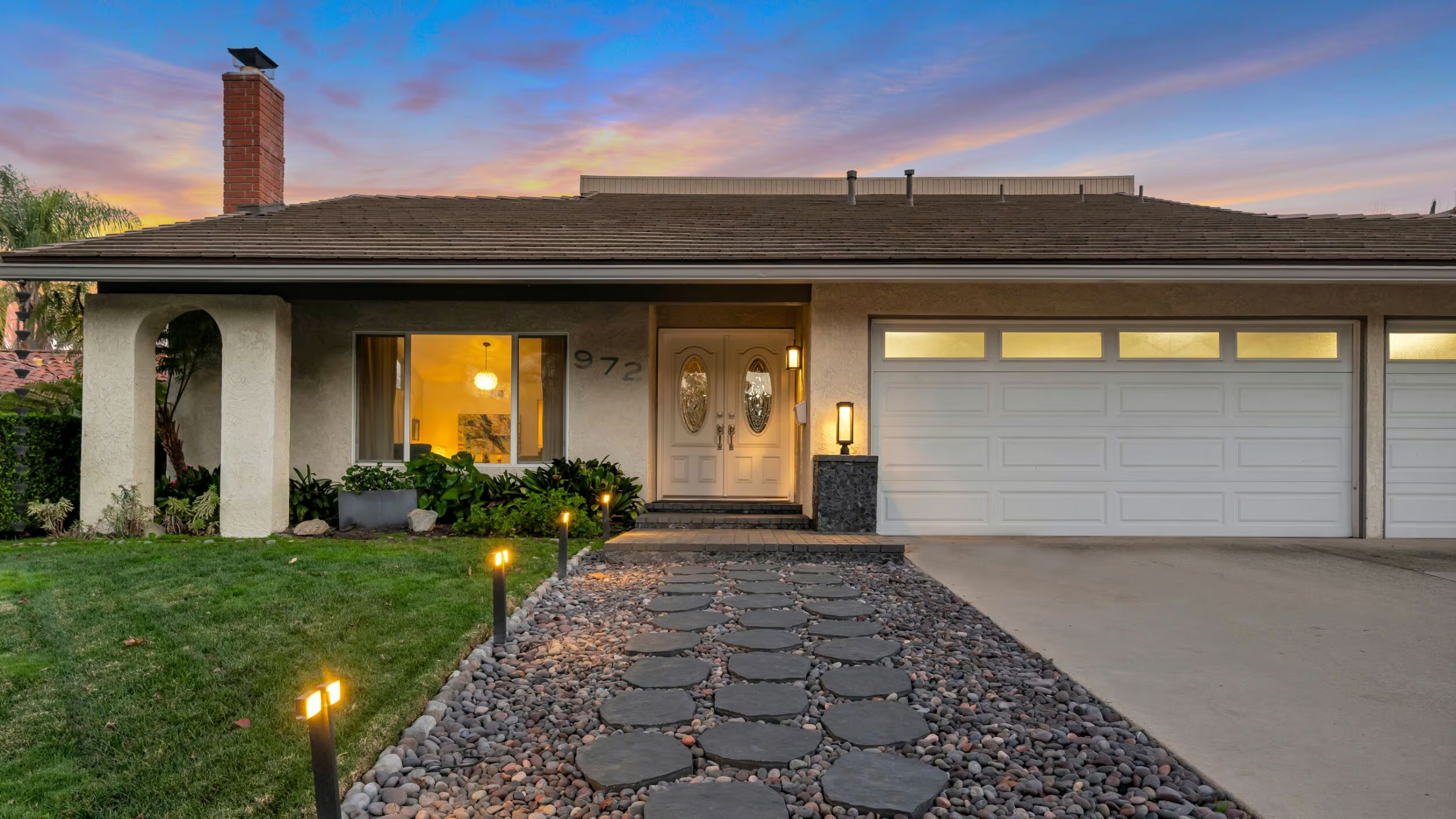
This page provides current guidance for buying and selling real estate in the Conejo Valley. It is written and updated quarterly by Michael Rice, a Conejo Valley real estate advisor with over 25 years of local experience, using local MLS data and on-the-ground market insights.


Prepping Your Home For Sale
CONDITION MATTERS AGAIN
In recent years, sellers could skip major prep work, but today’s buyers prefer move-in-ready homes to offset higher mortgage costs.
MY ADVICE
- Focus on small upgrades like fresh paint or new flooring and address minor repairs; a little effort goes a long way.
- Declutter as much as possible. Today’s buyers prefer sparsely furnished rooms with clean surfaces.
- Consider hiring a professional staging company if your home is vacant (typically ranges $4k-$8k for 2 months).
EXPECT FEWER SHOWINGS, BUT THAT’S OK
The days of packed weekend showings and multiple offers by Monday are mostly behind us. It may take a bit longer to sell, but properly priced homes in high-demand areas like the Conejo Valley will sell.
MY ADVICE
- Make your home easy to show—flexibility is key. Consider utilizing an agent Supra lockbox for flexibility, security, and convenient showings.
- Create a positive experience that helps buyers envision their future in your home.
Pricing Your Home In 2026
HOME PRICES ARE EXPECTED TO RISE
Lower mortgage rates are bringing buyers back to the market which is expected to cause home prices to increase.
- Q4 CONEJO VALLEY UPDATE: Median prices ended Q4 at $1,030,000, relatively flat over the last 12 months bouncing between $1.1M-$1.2M.
- FORECAST: The California Association of Realtors forecasts home prices to increase 3.6% increase in 2026 to $905k, while Conejo Valley may see even higher growth.
* If you want to see how recent pricing and demand trends are playing out locally, you can review the latest Market Update
PRICING CORRECTLY MATTERS
Overall, we’ve shifted to a more balanced market, and buyers today are more cautious and have less purchasing power. While multiple offers still occasionally happen, pricing your home too high can quickly backfire.
MY ADVICE
- Lean conservative with your asking price – aim for the middle of the price spectrum to attract the most interest.
- Underpricing is low risk. Eager buyers will bid your home up.
- Overpricing, however, can lead to your home sitting on the market, which may require price cuts later. More time on the market often leads to a lower sales price.
ADJUST QUICKLY IF NECESSARY
If your home isn’t drawing many showings – or none at all, it could be a sign that your asking price is too high. Even in a low-competition market, your property should be attracting buyers.
MY ADVICE
- Listen to market feedback—adjust your price quickly if needed.
- In most cases, a meaningful reduction – typically at least $10K to $20K – will help generate more interest, though this can vary depending on your home and local market conditions.
Managing Offers
FULL PRICE OFFERS ARE LESS COMMON
While some homes may still receive full-price or even multiple offers, it’s less frequent than in past years. You might also encounter lowball offers, but don’t let that discourage you.
* I break down typical selling costs in more detail on the Cost to Sell page if you want a clearer picture of how those numbers usually work.
MY ADVICE
- Today’s buyer is more cautious. Be patient and prepared for negotiations.
- Keep emotions in check and focus on securing a reasonable deal.
- Remember, losing an interested buyer during negotiations can lead to selling for less
BUYERS EXPECT CONCESSIONS
Gone are the days when buyers waived contingencies and concessions to secure a home. Buyers now expect sellers to fix broken or safety-related items, and perks like free seller rent-backs are less common.
MY ADVICE
- Sellers in both Ventura and LA Counties are only required to do 3 things: strap the water heater for earthquake safety, install smoke detectors, and install carbon monoxide detectors. That’s it. Everything else is negotiable.
- However, broken items and safety concerns are considered fair game. Consider reasonable requests.
- Keep the big picture in mind – small concessions can keep the deal on track and prevent your home from going back on the market which may lead to a lower sales price.
AGENT COMPENSATION RULES HAVE CHANGED
Agent compensation has always been and remains negotiable. Key changes went into effect in 2024:
- Buyer agent compensation can no longer be advertised in the MLS. But, sellers can still offer it.
- Buyers and their agent must now sign a Buyer Representation Agreement – a legal contract outlining the services provided, obligations, and the terms of compensation.
MY ADVICE
- You will attract more buyers to see your home by offering buyer agent compensation. Over 80% of buyers work with an agent, and our goal is to appeal to as many buyers as possible.
- Help facilitate the buyers ability to purchase your property by including the compensation in the price rather that hoping the buyer has the means to pay their agent out of pocket.
- ADVANTAGE TO YOU: By offering buyer’s agent compensation upfront, you’ll attract the most qualified buyers and you’ll have a more accurate net proceeds estimate knowing what your costs will be.
Monthly Market Snapshot (YoY)
Conejo Valley - As of March 1, 2026 |
||
|---|---|---|
| Median Home Price | $1,167,500 | -6.6% |
| Number of Homes for Sale | 397 homes | 415 last year |
| Avg Days on Market | 51 days | 51 last year |
| 30 Year Mortgage Rate | 6.10% | 6.8% last year |
Questions Other Sellers Often Ask
These are some of the questions sellers often ask once they start thinking more seriously about what all of this means for them.
Should I wait for the spring market to sell my home?
Trying to time the market involves more luck than skill. Spring tends to be the busiest time of year with the most active buyers, but it also brings the most sellers. The second half of the year is typically slower, though you’ll face less competition from other homes on the market. We’re fortunate in Southern California – our mild weather keeps the market moving year-round. What matters more than timing is aligning your plans with realistic pricing and buyer expectations. Properly priced homes sell in most market conditions.
How much does pricing strategy really affect my bottom line?
Pricing is one of the biggest drivers of how a home performs. Overpricing often causes a home to sit, which usually leads to price reductions. Extended time on the market can make a home appear stale and attract lower offers. Pricing too low can leave money on the table, although in the Conejo Valley an underpriced listing will often attract multiple offers and get bid up. The goal is finding a price point that attracts serious, ready-to-go buyers who have been waiting for a home like yours.
Do I need to do updates or renovations before listing?
Not necessarily. Some touchups and improvements can pay off such as fresh paint, light flooring refreshes, or minor fixture updates, while larger remodels rarely return more than they cost. If a home is very dated, it can sometimes make more sense to sell it as-is and appeal to investors or HGTV type buyers. I break down common seller expenses and trade-offs on my Cost To Sell page.
How long should I expect my home to be on the market?
Days on market vary by price range, condition, neighborhood, and time of year. In recent years, homes have averaged roughly 25–35 days on the market during the busy spring season and closer to 60–65 days toward the end of the year. A well-priced and well-presented home in today’s Conejo Valley market typically sells faster than a comparable home that’s overpriced or under-prepared.
Should I accept the first strong offer or wait for “more”?
There’s no universal answer, but often the first strong offer ends up being the best one. If the buyer is well-qualified, doesn’t need to sell another home first, and the terms are solid and reasonably close to your asking price, it’s worth serious consideration. Holding out for something better can increase the risk of your home sitting longer or running into changing market conditions.
How do interest rates affect selling?
In today’s market, not that much. Interest rates have been bouncing in the 6-7% range for the last several years. Most buyers have given up hoping for a dramatic drop in rates, and small rate fluctuations don’t really move the market much. A careful pricing strategy and understanding of buyer motivation matter more than rate headlines. Many buyers in this market are still active, even with higher rates, when homes are priced right.
What should I know about negotiation right now?
Today’s buyer is much more cautious than years past. And with increasing inventory of available homes, buyers have more options and a stronger negotiating position. That’s why the condition and price of the home are vital to strengthening your negotiating power. No two homes are exactly alike. Making your home stand out evens the playing field and can lead to better terms.
Is staging necessary or just a nice-to-have?
Staging is definitely not necessary, but it does help buyers visualize living in the space, which can improve perceived value. Especially in competitive price ranges, a clean, strategically furnished home can reduce objections and support stronger offers. Full staging costs about $4k-$8k for 2 months. I cover those costs and others on my Cost To Sell page.